
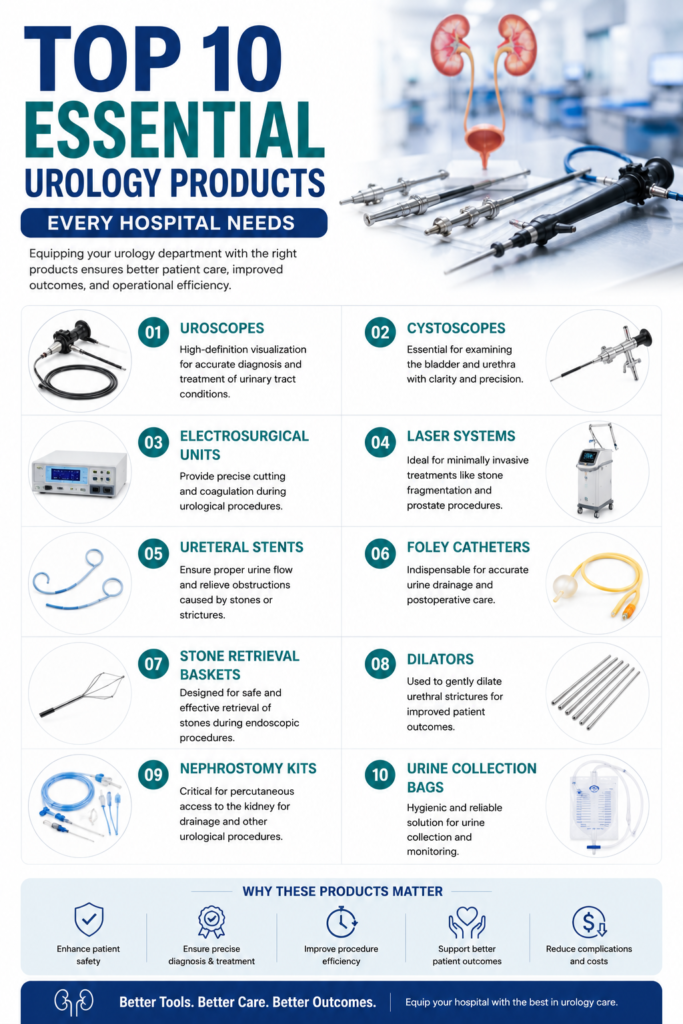
Urology plays a vital role in modern healthcare by focusing on the diagnosis, treatment, and management of conditions affecting the urinary tract and male reproductive system. From routine catheterization procedures to complex kidney stone treatments, healthcare providers depend on specialized urology products to deliver safe, effective, and efficient patient care. Hospitals and healthcare facilities must maintain a reliable inventory of high-quality urology devices to meet the needs of patients across emergency, inpatient, outpatient, and surgical settings.
Selecting the right urology products is essential for improving clinical outcomes, supporting healthcare professionals, and ensuring patient comfort. Below are ten essential urology products that every hospital should consider as part of a comprehensive urology care program.
1. Foley Catheter
The Foley catheter is one of the most commonly used urology devices in hospitals worldwide. It is designed to drain urine from the bladder and is widely used for patients who are unable to urinate naturally due to surgery, illness, injury, or urinary retention. The catheter features a small balloon that helps keep it securely positioned within the bladder.
Hospitals rely on Foley catheters for postoperative care, critical care monitoring, and long-term urinary management. High-quality catheters help reduce patient discomfort and support effective urine drainage while minimizing the risk of complications.
2. Ureteral Stent
A ureteral stent is a thin medical tube inserted into the ureter to maintain urine flow from the kidney to the bladder. These stents are commonly used when kidney stones, tumors, inflammation, or surgical procedures cause urinary obstruction.
Ureteral stents play a crucial role in protecting kidney function and preventing complications associated with blocked urine flow. Their use helps ensure proper drainage and supports recovery following urological interventions.
3. Double J (DJ) Stent
The Double J Stent is a specialized ureteral stent featuring curled ends that help maintain proper positioning within the urinary tract. It is frequently used after kidney stone removal procedures and other urological surgeries.
DJ stents help prevent ureteral blockage, support healing, and maintain urine drainage during recovery. Their effectiveness and versatility make them a standard component of hospital urology departments.
4. Guide Wire
Guide wires are essential tools used in a wide variety of urological procedures. These flexible wires assist physicians in navigating the urinary tract and accurately placing catheters, stents, and other medical devices.
Because precision is critical during minimally invasive procedures, guide wires help improve procedural accuracy and efficiency. Hospitals performing endourology and interventional procedures require dependable guide wires as part of their standard equipment inventory.
5. Urine Collection Bag
Urine collection bags are indispensable for patients requiring catheterization. These devices safely collect urine while allowing healthcare providers to monitor urinary output accurately.
They are commonly used in intensive care units, postoperative recovery areas, long-term care settings, and general hospital wards. Reliable urine collection systems contribute to patient hygiene, comfort, and effective clinical monitoring.
6. Percutaneous Nephrostomy Catheter
A percutaneous nephrostomy catheter provides direct drainage from the kidney when normal urine flow is obstructed. The catheter is inserted through the skin into the renal collecting system and is often used in emergency situations involving severe urinary obstruction.
Hospitals depend on nephrostomy catheters to relieve pressure on the kidneys, prevent infection-related complications, and preserve renal function. These devices are particularly valuable in managing complex urological conditions.
7. Stone Retrieval Basket
Kidney stones affect millions of patients worldwide and often require specialized treatment. Stone retrieval baskets are designed to capture and remove stones from the urinary tract during minimally invasive procedures.
These devices enable urologists to extract stones efficiently while reducing the need for more invasive surgical interventions. Hospitals offering advanced stone management services should maintain high-quality stone retrieval systems to support patient care.
8. Urological Dilators
Urological dilators are used to widen narrowed sections of the urinary tract caused by strictures, scarring, or other conditions. They help restore normal urinary flow and facilitate the insertion of additional medical devices when required.
These instruments are commonly used in both diagnostic and therapeutic procedures. Their availability allows healthcare providers to manage urinary tract narrowing effectively while improving patient outcomes.
9. Cystoscopy Accessories
Cystoscopy is a commonly performed procedure used to examine the bladder and urethra. Hospitals performing cystoscopic procedures require a range of specialized accessories, including irrigation systems, biopsy forceps, graspers, and procedural instruments.
These accessories help physicians diagnose urinary tract disorders, investigate symptoms, and perform minimally invasive treatments. Well-equipped cystoscopy units contribute significantly to efficient and accurate urological care.
10. Hemodialysis Catheter
Although primarily associated with renal care, hemodialysis catheters play an important role in supporting patients with severe kidney dysfunction. These catheters provide temporary or long-term vascular access for dialysis treatments.
Hospitals managing patients with kidney disease require dependable dialysis access devices to ensure uninterrupted treatment and patient safety. High-quality hemodialysis catheters contribute to effective renal support and improved quality of life.
Why Quality Matters in Urology Products
Choosing high-quality urology products is just as important as maintaining the right inventory. Medical devices used in urological procedures must provide reliability, safety, and consistent performance. Products manufactured from premium materials help withstand repeated use, support sterilization processes, and reduce the risk of complications.
Healthcare facilities should select products that comply with recognized quality standards and are sourced from trusted manufacturers. Reliable devices contribute to improved procedural outcomes, enhanced patient comfort, and greater confidence among healthcare professionals.
The Growing Importance of Urology Care
The demand for urology services continues to increase due to aging populations, lifestyle-related health conditions, and growing awareness of urinary tract disorders. Hospitals must be prepared to meet this demand by investing in modern, high-performance urology products.
Well-equipped urology departments can provide timely diagnosis, effective treatment, and comprehensive patient management. From routine urinary drainage to advanced stone removal procedures, the availability of essential devices directly impacts the quality of care delivered.
Conclusion
Urology products are fundamental components of modern healthcare facilities. Devices such as Foley catheters, ureteral stents, guide wires, urine collection bags, nephrostomy catheters, stone retrieval baskets, urological dilators, cystoscopy accessories, and hemodialysis catheters support a wide range of diagnostic and therapeutic procedures. By investing in high-quality products and maintaining a comprehensive inventory, hospitals can enhance patient safety, improve clinical efficiency, and deliver superior urological care. A well-equipped urology department is an essential part of providing reliable and effective healthcare services in today’s medical environment.