
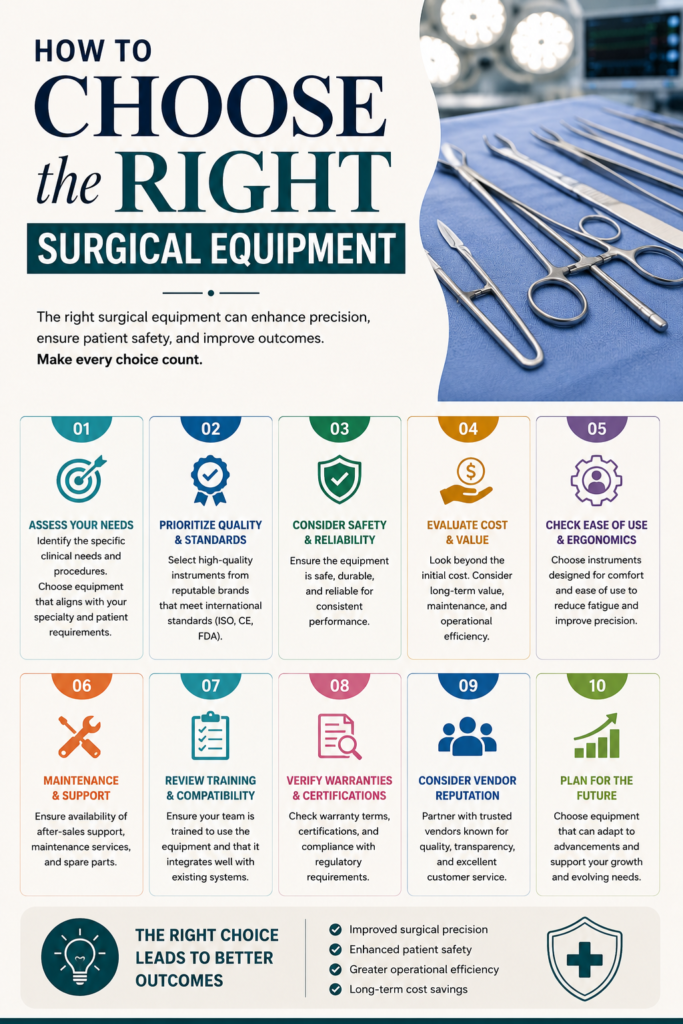
1. Understand the Intended Surgical Application
The first step in selecting surgical instruments is identifying the specific procedure for which they will be used. Different medical specialties require different instruments. For example, cardiology procedures demand specialized catheters and guidewires, while gynecology procedures require instruments such as vaginal speculums, uterine curettes, and ovum forceps. Selecting instruments designed specifically for the intended application ensures optimal performance and reduces procedural risks.
2. Prioritize Quality Materials
The quality of materials used in manufacturing surgical instruments significantly affects their durability and performance. Medical-grade stainless steel is widely preferred due to its corrosion resistance, strength, and ability to withstand repeated sterilization cycles. Premium materials help maintain sharpness, precision, and reliability over time, making them a valuable investment for healthcare facilities.
3. Check Compliance with Industry Standards
Reliable surgical instruments should comply with recognized international quality standards and regulatory requirements. Certifications demonstrate that the products have undergone strict quality control processes and meet established safety and performance criteria. Compliance with healthcare standards provides confidence that the instruments are suitable for clinical use and support patient safety.
4. Evaluate Precision and Performance
Surgical procedures require exceptional accuracy and control. Instruments should be carefully evaluated for their design, functionality, and precision. Well-manufactured instruments enable healthcare professionals to perform procedures with greater confidence and efficiency. Even minor imperfections can affect surgical outcomes, making precision an essential consideration during product selection.
5. Consider Ergonomic Design
Healthcare professionals often perform lengthy and complex procedures. Ergonomically designed instruments help reduce hand fatigue, improve grip comfort, and enhance procedural control. Instruments that provide better handling contribute to improved accuracy and surgeon comfort, particularly during extended surgical operations.
6. Assess Durability and Longevity
Surgical instruments represent a significant investment for hospitals and clinics. Durable products offer better long-term value by maintaining performance through repeated use and sterilization. High-quality instruments require fewer replacements, reducing operational costs while ensuring consistent clinical performance.
7. Verify Sterilization Compatibility
Infection prevention is a fundamental aspect of healthcare. Surgical instruments must withstand standard sterilization methods without compromising their structural integrity or functionality. Products designed for repeated sterilization cycles help maintain hygiene standards while supporting long-term usability.
8. Ensure Equipment Compatibility
Before purchasing new instruments, healthcare facilities should verify compatibility with existing equipment and systems. Proper integration supports workflow efficiency and prevents unnecessary operational challenges. Compatible instruments contribute to smoother procedures and improved clinical outcomes.
9. Research Manufacturer Reputation
Choosing a trusted manufacturer is just as important as selecting the right product. Established companies with proven industry experience often provide superior quality assurance, product consistency, and customer support. Reviewing the manufacturer’s history, product portfolio, and customer feedback can help identify reliable suppliers.
10. Evaluate After-Sales Support
Strong after-sales service can provide significant value throughout the product lifecycle. Technical assistance, warranty coverage, replacement support, and responsive customer service contribute to a positive purchasing experience. Healthcare facilities should partner with suppliers committed to long-term customer satisfaction.
11. Compare Cost and Value
While budget considerations are important, the lowest-priced option is not always the most cost-effective. Higher-quality instruments may offer greater durability, reliability, and performance, resulting in lower overall ownership costs. Decision-makers should focus on long-term value rather than initial purchase price alone.
12. Focus on Patient Safety
Patient safety should remain the primary consideration when selecting surgical instruments. High-quality products minimize procedural risks, improve clinical efficiency, and support successful treatment outcomes. Investing in reliable instruments ultimately benefits both healthcare providers and patients.
Conclusion
Choosing the right surgical instruments requires a careful balance of quality, performance, durability, safety, and value. By evaluating factors such as material quality, regulatory compliance, ergonomic design, sterilization compatibility, manufacturer reputation, and patient safety considerations, healthcare facilities can make informed decisions that support excellent clinical outcomes. Investing in trusted surgical instruments ensures precision, reliability, and long-term success in modern healthcare environments.