
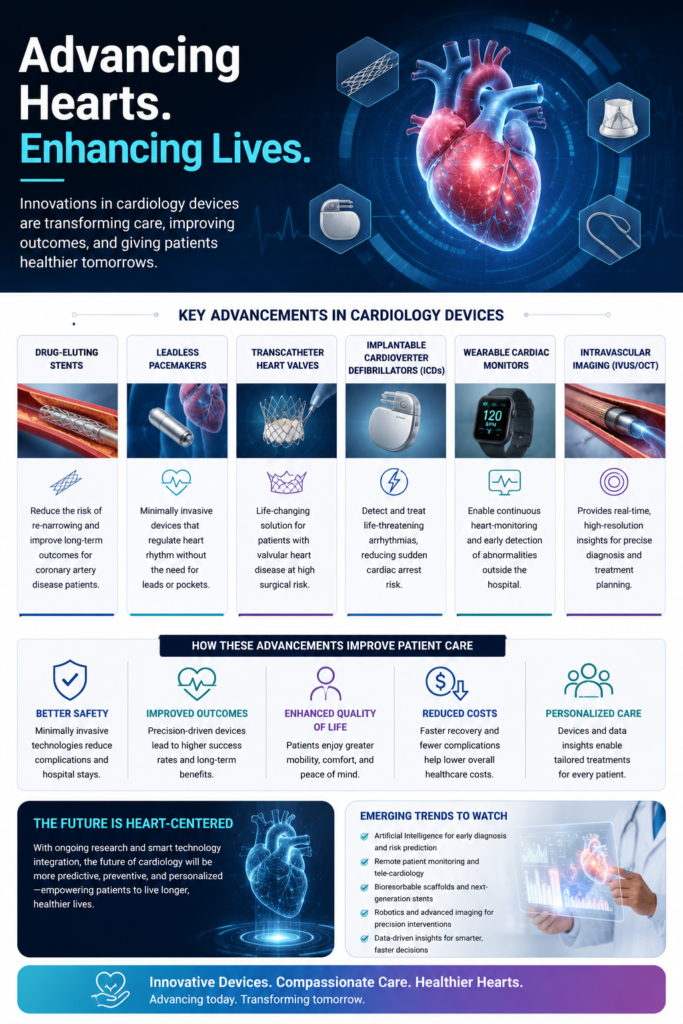
Cardiovascular diseases remain one of the leading health challenges worldwide, affecting millions of people each year. Over the past few decades, remarkable advancements in cardiology devices have transformed the way heart conditions are diagnosed, monitored, and treated. These innovations have significantly improved patient outcomes, reduced recovery times, and enhanced the overall quality of cardiac care. From minimally invasive procedures to sophisticated monitoring technologies, modern cardiology devices continue to reshape the future of cardiovascula medicine.
The Evolution of Cardiology Technology
Cardiology has experienced tremendous technological growth since the introduction of basic diagnostic tools such as the electrocardiogram (ECG). Today, healthcare professionals have access to advanced devices that provide real-time insights into heart function, enabling earlier diagnosis and more precise treatment planning.
The shift toward minimally invasive procedures has been one of the most significant developments in cardiology. Modern devices allow physicians to perform complex interventions through small incisions, reducing surgical trauma and helping patients recover more quickly. As a result, hospitals and healthcare providers can deliver safer and more efficient cardiac care.
Advanced Diagnostic Devices
Accurate diagnosis is the foundation of effective cardiovascular treatment. Modern cardiology devices have greatly enhanced the ability of healthcare professionals to identify heart conditions at earlier stages.
ECG electrodes and monitoring systems continue to play a vital role in assessing heart rhythm and electrical activity. Today’s digital ECG technologies provide faster results, improved accuracy, and seamless integration with hospital information systems. Portable monitoring devices also enable long-term cardiac assessment, helping physicians detect irregular heart rhythms that may not appear during routine examinations.
Advanced imaging technologies have further improved cardiac diagnostics. Catheter-based diagnostic procedures allow physicians to evaluate blood flow, identify arterial blockages, and assess overall cardiovascular health with greater precision than ever before.
The Rise of Interventional Cardiology
Interventional cardiology has revolutionized the treatment of coronary artery disease and other cardiovascular conditions. Instead of relying solely on open-heart surgery, physicians can now treat many cardiac problems using minimally invasive catheter-based techniques.
One of the most important innovations in this field is the development of angiographic catheters. These specialized devices enable healthcare professionals to visualize blood vessels and identify areas requiring treatment. Combined with advanced imaging systems, angiographic procedures provide detailed information that supports accurate clinical decision-making.
Percutaneous Transluminal Coronary Angioplasty (PTCA) balloon catheters have also transformed patient care. These devices are used to open narrowed or blocked coronary arteries, restoring blood flow to the heart. The procedure often results in shorter hospital stays, reduced discomfort, and faster recovery compared to traditional surgical approaches.
Improvements in Cardiac Monitoring
Continuous monitoring is essential for managing both acute and chronic cardiac conditions. Modern pressure monitoring systems provide real-time measurements that help healthcare teams evaluate cardiovascular performance and respond quickly to changes in patient status.
Pressure monitoring lines and related accessories are commonly used in intensive care units, cardiac catheterization laboratories, and surgical settings. These devices deliver valuable clinical information that supports accurate diagnosis and treatment planning.
Remote monitoring technologies have further expanded the possibilities for patient care. Wearable cardiac monitoring devices allow patients to remain active while healthcare providers track heart function from a distance. This approach improves patient convenience and enables earlier detection of potential complications.
Innovations in Cardiac Rhythm Management
Abnormal heart rhythms, known as arrhythmias, can significantly affect a patient’s health and quality of life. Recent advancements in rhythm management devices have improved the ability to diagnose and treat these conditions effectively.
Temporary pacemaker leads are widely used to support patients experiencing rhythm disturbances during surgery, emergency situations, or recovery periods. These devices help maintain stable heart function until long-term treatment decisions can be made.
Modern pacemaker technologies continue to evolve, offering improved reliability, longer battery life, and enhanced patient comfort. These innovations allow patients with rhythm disorders to lead more active and independent lives while maintaining appropriate cardiac function.
Enhanced Patient Safety Through Hemostasis Technology
Patient safety remains a top priority in all cardiovascular procedures. Hemostasis valves have become essential components of interventional cardiology by helping control blood flow during catheter-based procedures.
These devices minimize blood loss, reduce contamination risks, and improve procedural efficiency. Their role in supporting safe vascular access has contributed significantly to the success of minimally invasive cardiac interventions.
Similarly, introducer sheaths provide secure access to blood vessels during diagnostic and therapeutic procedures. Their continued refinement has improved procedural safety and enhanced the overall patient experience.
The Impact of Digital Healthcare Integration
Digital transformation has become an important aspect of modern cardiology. Advanced cardiology devices are increasingly integrated with electronic health records, imaging platforms, and hospital management systems.
This connectivity allows healthcare professionals to access patient information more efficiently, collaborate across departments, and make informed clinical decisions. Digital integration also supports data analysis, enabling healthcare providers to identify trends and improve treatment strategies.
Artificial intelligence and machine learning technologies are beginning to play a role in cardiac diagnostics and patient management. These tools can assist physicians by analyzing large volumes of clinical data and identifying patterns that may indicate developing cardiovascular conditions.
Improving Patient Outcomes
The ultimate goal of cardiology innovation is to improve patient outcomes. Modern devices help achieve this objective by enabling earlier diagnosis, more accurate treatment, and better long-term management of cardiovascular diseases.
Minimally invasive procedures reduce surgical risks and shorten recovery times. Advanced monitoring systems allow healthcare providers to identify complications quickly. Improved diagnostic tools support more precise treatment planning, while innovative therapeutic devices enhance procedural success rates.
Together, these advancements contribute to lower hospitalization rates, improved survival outcomes, and a higher quality of life for patients living with cardiovascular conditions.
The Future of Cardiology Devices
The future of cardiology is expected to bring even greater innovation. Researchers and manufacturers continue to develop devices that are smaller, smarter, and more efficient. Advances in sensor technology, wireless communication, and data analytics are likely to further enhance patient monitoring and disease management.
Personalized medicine is also becoming increasingly important. Future cardiology devices may be tailored to individual patient characteristics, allowing healthcare professionals to provide more targeted and effective treatments.
As technology continues to evolve, hospitals and healthcare providers will have access to increasingly sophisticated tools that support better cardiovascular care and improved patient experiences.
Conclusion
Advancements in cardiology devices have transformed the diagnosis, treatment, and management of cardiovascular diseases. Innovations such as angiographic catheters, PTCA balloon catheters, introducer sheaths, pressure monitoring systems, temporary pacemaker leads, and hemostasis valves have significantly improved patient care and procedural outcomes. Combined with digital healthcare technologies and modern monitoring solutions, these devices continue to enhance safety, efficiency, and treatment effectiveness. As cardiology technology advances, healthcare providers will be better equipped to deliver high-quality, patient-centered cardiac care and improve the lives of millions affected by cardiovascular disease worldwide.