
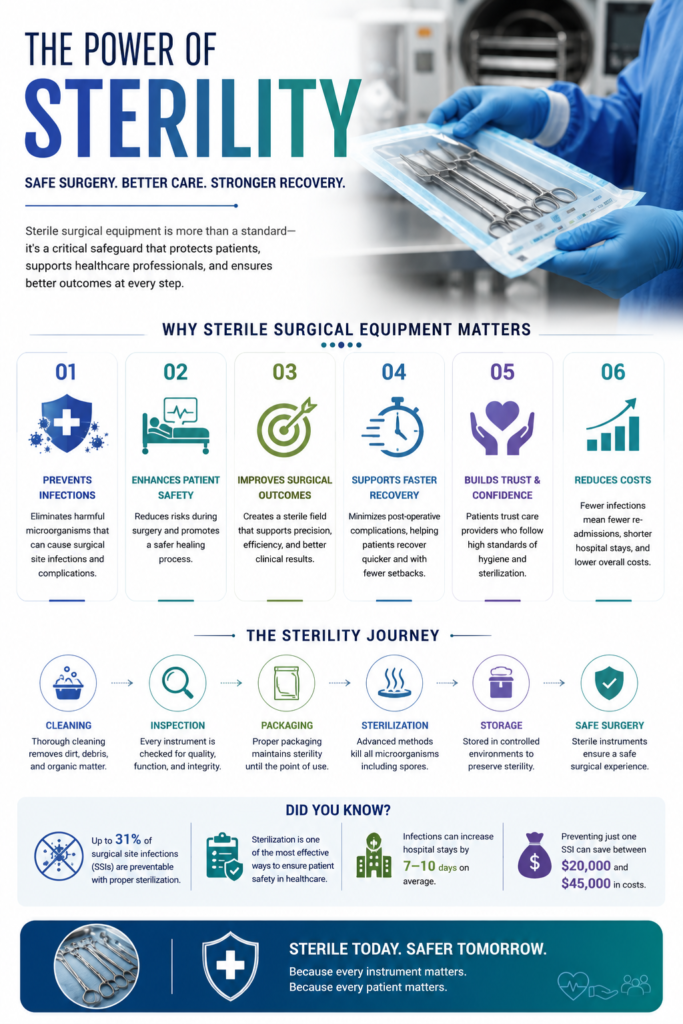
Sterile surgical equipment is a cornerstone of modern healthcare, playing a critical role in ensuring patient safety, preventing infections, and supporting successful medical outcomes. Every surgical procedure, whether minor or complex, relies on properly sterilized instruments to minimize the risk of contamination and protect both patients and healthcare professionals. As healthcare standards continue to evolve, maintaining strict sterilization practices remains one of the most important responsibilities of hospitals, clinics, and surgical centers.
Understanding Sterile Surgical Equipment
Sterile surgical equipment refers to medical instruments and devices that have been thoroughly cleaned and treated to eliminate all forms of microorganisms, including bacteria, viruses, fungi, and spores. Sterilization is achieved through approved methods such as steam sterilization, ethylene oxide treatment, plasma sterilization, or other validated processes.
These instruments are used in operating rooms, emergency departments, outpatient clinics, and specialized healthcare facilities where maintaining a contamination-free environment is essential for patient care.
Preventing Healthcare-Associated Infections
One of the primary reasons sterile surgical equipment is so important is its role in preventing healthcare-associated infections (HAIs). Surgical site infections can occur when harmful microorganisms enter the body during a medical procedure. Such infections can lead to prolonged hospital stays, additional treatments, increased healthcare costs, and serious complications.
By using properly sterilized instruments, healthcare providers significantly reduce the risk of introducing pathogens into surgical wounds. Effective sterilization practices help create a safer environment and contribute to better patient outcomes.
Enhancing Patient Safety
Patient safety is the highest priority in every healthcare setting. Sterile instruments provide an essential layer of protection during surgeries and invasive procedures. Even a small amount of contamination can lead to complications that may affect recovery and overall health.
Maintaining instrument sterility demonstrates a healthcare facility’s commitment to quality care. Patients can feel more confident knowing that strict infection-control measures are in place to protect their well-being throughout treatment.
Supporting Successful Surgical Outcomes
The success of a surgical procedure depends on many factors, including the quality and cleanliness of the instruments used. Sterile surgical equipment helps surgeons perform procedures under optimal conditions, reducing the likelihood of postoperative complications.
When instruments are properly sterilized and maintained, healthcare professionals can focus on precision and patient care without concerns about contamination risks. This contributes to smoother procedures and more predictable outcomes.
Protecting Healthcare Professionals
Sterilization not only protects patients but also safeguards healthcare workers. Surgeons, nurses, technicians, and support staff are regularly exposed to biological materials during medical procedures. Properly sterilized equipment reduces the risk of cross-contamination and occupational exposure to infectious agents.
A strong sterilization program creates a safer working environment and supports overall workplace health and safety initiatives within healthcare organizations.
Compliance with Healthcare Standards
Healthcare facilities must comply with strict regulations and infection-control guidelines established by national and international health authorities. Sterile surgical equipment is a fundamental requirement for meeting these standards.
Regular sterilization monitoring, quality assurance programs, and proper instrument handling procedures help healthcare providers maintain compliance and demonstrate their commitment to patient safety. Adhering to recognized standards also strengthens trust among patients, healthcare professionals, and regulatory bodies.
Extending Instrument Lifespan
Proper cleaning, sterilization, and maintenance procedures contribute to the longevity of surgical instruments. High-quality surgical equipment represents a significant investment for hospitals and clinics, making proper care essential.
When sterilization protocols are followed correctly, instruments remain functional, reliable, and safe for repeated use. This helps healthcare facilities maximize the value of their equipment while maintaining high clinical standards.
The Role of Modern Sterilization Technology
Advancements in sterilization technology have improved efficiency, accuracy, and safety within healthcare environments. Modern sterilization systems feature automated processes, monitoring mechanisms, and validation tools that help ensure consistent results.
These innovations support healthcare providers in maintaining high levels of sterility while reducing the potential for human error. As technology continues to evolve, sterilization processes are becoming even more reliable and effective.
Building Patient Trust and Confidence
Patients expect healthcare facilities to maintain the highest standards of hygiene and safety. Visible commitment to sterilization practices helps build confidence and trust in medical services.
A reputation for maintaining sterile surgical equipment reflects professionalism, quality care, and dedication to patient well-being. Healthcare organizations that prioritize infection prevention often experience stronger patient satisfaction and improved clinical outcomes.
Conclusion
Sterile surgical equipment is essential for delivering safe, effective, and high-quality healthcare. By preventing infections, protecting patients and healthcare workers, supporting successful surgical outcomes, and ensuring compliance with healthcare standards, sterilization remains a critical component of modern medical practice. Hospitals and clinics that invest in high-quality surgical instruments and maintain rigorous sterilization protocols are better positioned to provide exceptional patient care. In an environment where safety and precision are paramount, sterile surgical equipment serves as the foundation of reliable and effective healthcare delivery.