
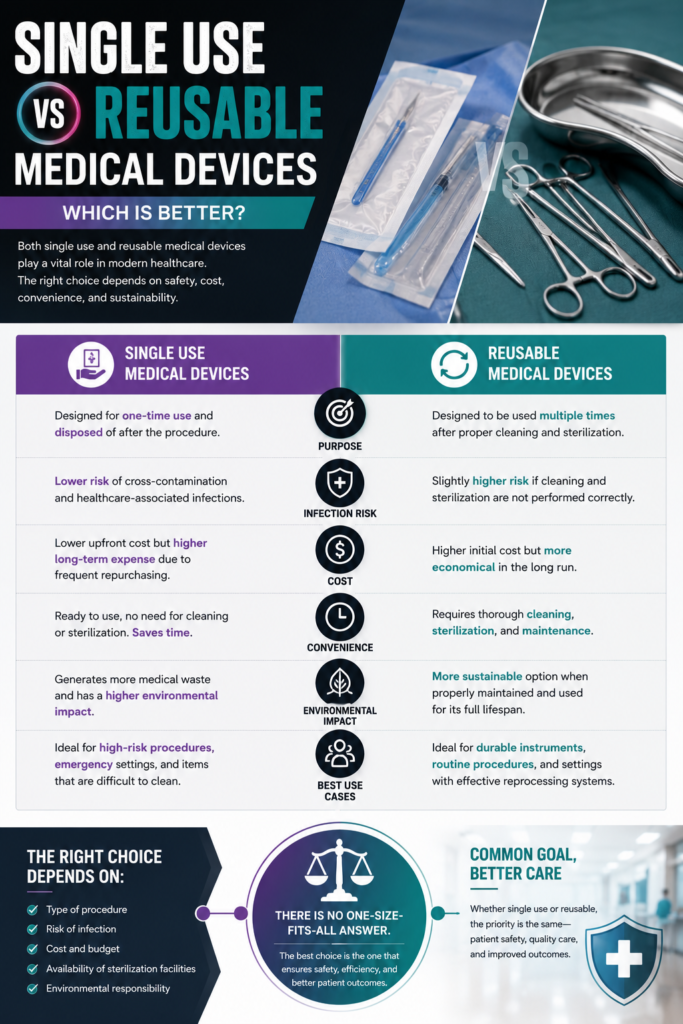
Medical devices are essential components of modern healthcare, supporting everything from routine examinations to complex surgical procedures. Hospitals, clinics, and healthcare providers rely on a wide range of instruments and devices to diagnose, monitor, and treat patients effectively. One of the most important decisions healthcare facilities face is choosing between single-use and reusable medical devices. Both options offer distinct advantages and challenges, making the decision dependent on factors such as patient safety, cost, environmental impact, and clinical requirements.
Understanding the differences between single-use and reusable devices can help healthcare organizations make informed decisions while maintaining high standards of patient care.
What Are Single-Use Medical Devices?
Single-use medical devices, also known as disposable devices, are designed to be used on a single patient during one procedure and then discarded. These products are manufactured under strict quality standards and arrive sterile and ready for use.
Common examples include syringes, catheters, surgical drapes, gloves, ECG electrodes, infusion sets, specimen collection products, and certain diagnostic accessories. Because these devices are intended for one-time use, they eliminate the need for cleaning, sterilization, and reprocessing.
What Are Reusable Medical Devices?
Reusable medical devices are designed to withstand repeated use after undergoing proper cleaning, disinfection, and sterilization procedures. These products are typically manufactured from durable materials such as stainless steel, titanium, or specialized medical-grade polymers.
Examples include surgical scissors, forceps, retractors, needle holders, speculums, curettes, endoscopic instruments, and various surgical tools used in operating rooms. With appropriate maintenance, reusable devices can remain functional for many years.
Advantages of Single-Use Medical Devices
Enhanced Infection Control
One of the greatest benefits of single-use devices is their contribution to infection prevention. Because each product is used only once, there is no risk of contamination resulting from improper cleaning or sterilization.
This advantage is particularly important in procedures where patient safety and infection control are critical. Disposable products help reduce the likelihood of healthcare-associated infections and cross-contamination between patients.
Convenience and Efficiency
Single-use devices arrive sterile and ready for immediate use. Healthcare providers do not need to invest time in cleaning, packaging, sterilizing, or inspecting the equipment before each procedure.
This convenience improves workflow efficiency and allows medical staff to focus more on patient care. In busy hospitals and emergency settings, ready-to-use products can be especially valuable.
Consistent Performance
Each disposable device is brand new when used. Healthcare professionals can expect consistent performance without concerns about wear, corrosion, or damage caused by repeated sterilization cycles.
This reliability contributes to predictable procedural outcomes and greater confidence during patient treatment.
Reduced Maintenance Requirements
Disposable products eliminate the costs and resources associated with equipment maintenance, repairs, sterilization equipment, and reprocessing personnel. This can simplify inventory management and operational planning.
Disadvantages of Single-Use Medical Devices
Higher Long-Term Costs
Although individual disposable products may appear inexpensive, the ongoing need for replacement can result in substantial long-term expenses. High-volume healthcare facilities often spend significant amounts on regularly replenishing disposable inventory.
Environmental Concerns
One of the most common criticisms of single-use devices is the large volume of medical waste they generate. Discarded products contribute to environmental challenges and increase waste management requirements for healthcare facilities.
Dependence on Supply Chains
Hospitals relying heavily on disposable products must maintain consistent supply chains. Product shortages or distribution disruptions can affect availability and potentially impact patient care.
Advantages of Reusable Medical Devices
Cost-Effectiveness Over Time
Reusable devices often require a higher initial investment but can provide substantial cost savings over their lifespan. When maintained properly, a single instrument may be used hundreds or even thousands of times.
This long-term value makes reusable devices attractive for hospitals seeking to optimize operational budgets.
Environmental Sustainability
Reusable instruments generate significantly less waste compared to disposable alternatives. Many healthcare organizations are increasingly focused on sustainability initiatives, making reusable devices an important part of environmentally responsible healthcare practices.
Reducing medical waste supports broader efforts to minimize environmental impact while maintaining quality patient care.
Durability and Reliability
High-quality reusable instruments are designed to withstand repeated sterilization and clinical use. Premium materials such as surgical-grade stainless steel provide exceptional durability and long-term performance.
These devices often offer superior tactile feedback and precision, particularly during surgical procedures.
Reduced Inventory Consumption
Since reusable devices remain in service for extended periods, healthcare facilities do not need to purchase replacements as frequently. This can simplify procurement planning and inventory management.
Disadvantages of Reusable Medical Devices
Sterilization Requirements
Reusable instruments require thorough cleaning, disinfection, inspection, and sterilization after every use. Failure to follow proper reprocessing protocols can increase the risk of contamination and infection.
Maintaining effective sterilization programs requires specialized equipment, trained personnel, and strict quality control measures.
Higher Upfront Investment
Purchasing reusable medical devices often involves higher initial costs. Hospitals must also invest in sterilization systems, maintenance programs, and staff training to ensure proper instrument handling.
Risk of Wear and Damage
Over time, repeated use and sterilization can affect instrument performance. Healthcare facilities must regularly inspect devices for signs of wear, corrosion, or damage and replace them when necessary.
Factors to Consider When Choosing
Selecting between single-use and reusable medical devices depends on several important factors:
Patient Safety
Patient safety should always be the primary consideration. Healthcare providers must evaluate which option offers the highest level of safety for specific procedures and clinical environments.
Procedure Type
Certain procedures may be better suited to disposable devices, while others benefit from reusable instruments. Surgical specialties often use a combination of both depending on clinical requirements.
Budget Considerations
Healthcare facilities should assess both short-term and long-term costs. While disposable devices reduce maintenance expenses, reusable instruments may offer better value over time.
Environmental Goals
Organizations committed to sustainability may prefer reusable devices where appropriate. However, infection control and patient safety must always remain the top priorities.
Regulatory Compliance
Both device types must meet relevant healthcare regulations and quality standards. Facilities should ensure that their equipment selection supports compliance with applicable guidelines.
Is One Better Than the Other?
There is no universal answer to whether single-use or reusable medical devices are better. Each option offers unique advantages that make it suitable for different healthcare settings and clinical applications.
Single-use devices excel in infection prevention, convenience, and consistency, making them ideal for many routine procedures and high-risk environments. Reusable devices provide long-term cost savings, environmental benefits, and exceptional durability, particularly in surgical and specialized healthcare settings.
In reality, most hospitals use a combination of both. Disposable products are often selected for infection-sensitive applications, while reusable instruments are preferred for procedures requiring durability, precision, and long-term value.
Conclusion
The choice between single-use and reusable medical devices involves balancing patient safety, operational efficiency, cost management, and environmental responsibility. Single-use devices offer convenience and enhanced infection control, while reusable instruments provide sustainability and long-term economic benefits. Rather than viewing one option as universally superior, healthcare organizations should evaluate their specific clinical needs and operational goals. By selecting the right combination of disposable and reusable products, hospitals and healthcare providers can deliver safe, efficient, and high-quality patient care while optimizing resources for the future.