
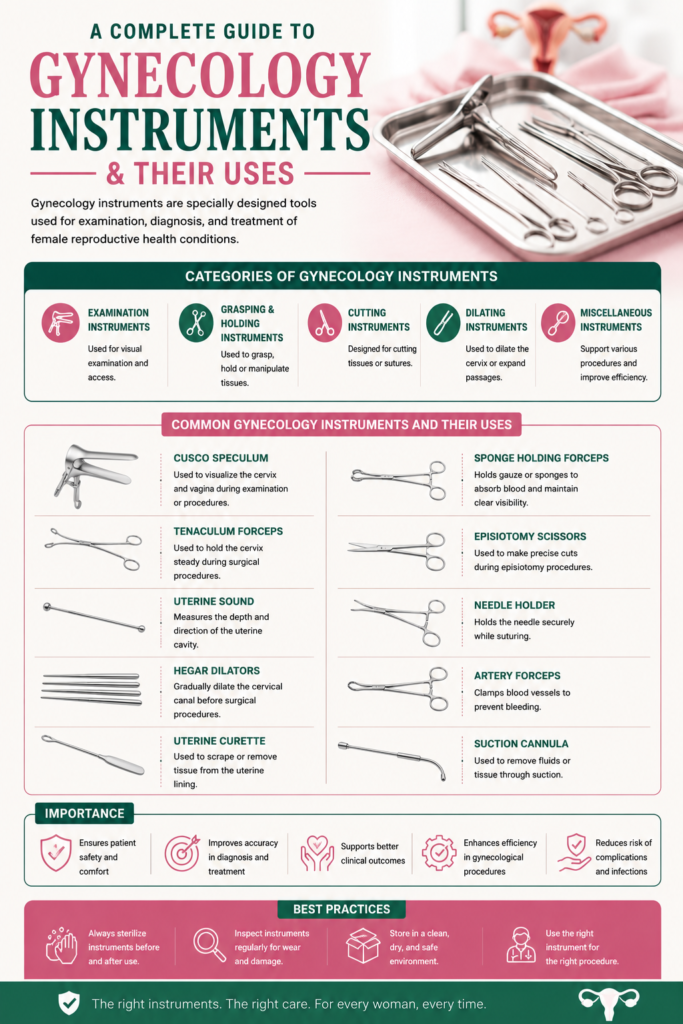
Gynecology is a specialized branch of medicine focused on the diagnosis, treatment, and management of conditions affecting the female reproductive system. From routine examinations to advanced surgical procedures, gynecologists rely on a wide range of specialized instruments to provide safe, accurate, and effective patient care. These instruments play a crucial role in women’s healthcare by assisting medical professionals in conducting examinations, diagnosing conditions, performing treatments, and supporting reproductive health services.
Understanding the purpose and application of various gynecology instruments is essential for healthcare providers, medical students, hospitals, and healthcare distributors. This comprehensive guide explores some of the most commonly used gynecology instruments and their importance in modern clinical practice.
The Importance of Gynecology Instruments
Gynecology instruments are designed to help healthcare professionals perform procedures with precision while ensuring patient comfort and safety. These tools support a variety of applications, including pelvic examinations, cervical screenings, fertility assessments, biopsies, surgical procedures, and obstetric care.
The quality and functionality of gynecology instruments directly influence diagnostic accuracy and treatment outcomes. Modern healthcare facilities prioritize high-quality instruments that offer reliability, durability, and ease of sterilization to maintain optimal standards of care.
Vaginal Speculums
One of the most recognizable gynecology instruments is the vaginal speculum. This device is used to gently separate the vaginal walls, allowing healthcare providers to examine the cervix and vaginal canal.
Cusco Vaginal Speculum
The Cusco Vaginal Speculum is a self-retaining instrument commonly used during routine gynecological examinations. It allows physicians to perform cervical inspections, Pap smear tests, and various diagnostic procedures without requiring additional assistance.
Its user-friendly design improves visibility while helping ensure patient comfort during examinations. The instrument is widely used in clinics, hospitals, and diagnostic centers worldwide.
Sims Vaginal Speculum
The Sims Vaginal Speculum differs from the Cusco model because it is not self-retaining and requires manual positioning during examinations. It provides excellent exposure of the vaginal walls and cervix, making it particularly useful during certain diagnostic and surgical procedures.
Healthcare professionals often prefer the Sims Speculum when greater flexibility and access are required during pelvic examinations.
Uterine Sound
A uterine sound is a slender instrument used to measure the depth and orientation of the uterine cavity. It is commonly utilized before procedures such as intrauterine device (IUD) insertion, dilation and curettage (D&C), and hysteroscopy.
By determining uterine dimensions accurately, healthcare providers can minimize procedural risks and improve treatment outcomes. The uterine sound remains a fundamental instrument in gynecological practice.
Tenaculum Forceps
Tenaculum forceps are specialized instruments designed to grasp and stabilize the cervix during various gynecological procedures. Their sharp hooked tips provide a secure grip, allowing physicians to manipulate cervical tissue when necessary.
These forceps are frequently used during IUD placement, cervical biopsies, uterine procedures, and other interventions requiring cervical stabilization. Their precision contributes to procedural efficiency and accuracy.
Ovum Forceps
Ovum forceps are long, slender instruments used for the removal of tissue, products of conception, foreign bodies, or other materials from the uterine cavity. Unlike standard forceps, ovum forceps feature rounded tips that help reduce tissue trauma during procedures.
These instruments play a valuable role in gynecological surgeries, uterine evacuations, and certain diagnostic interventions. Their design prioritizes both effectiveness and patient safety.
Uterine Curettes
Uterine curettes are instruments used to scrape or remove tissue from the uterine lining. They are commonly employed during diagnostic and therapeutic procedures involving the endometrium.
Healthcare providers use curettes to obtain tissue samples for laboratory analysis, investigate abnormal uterine bleeding, and perform uterine cleaning procedures. Available in various sizes and shapes, curettes are essential tools for gynecological diagnostics and treatment.
Hegar Dilators
Hegar dilators are smooth, cylindrical instruments used to gradually dilate the cervix before surgical or diagnostic procedures. They are typically available in a range of sizes, allowing healthcare providers to achieve controlled cervical dilation.
These instruments are frequently used before hysteroscopy, dilation and curettage procedures, and certain fertility treatments. Proper cervical dilation helps facilitate safe instrument insertion while reducing procedural complications.
IUD Insertion Kit
An Intrauterine Device (IUD) Insertion Kit contains specialized instruments used for the placement of contraceptive devices within the uterus. These kits often include forceps, uterine sounds, measuring instruments, and insertion tools.
IUD insertion has become a widely used method of long-term contraception due to its effectiveness and convenience. A complete insertion kit supports safe and accurate device placement while enhancing patient comfort.
Dilation and Curettage (D&C) Instruments
Dilation and Curettage, commonly referred to as D&C, is a procedure used for diagnostic evaluation and treatment of various uterine conditions. The procedure typically involves cervical dilation followed by tissue removal from the uterine lining.
A D&C instrument set may include dilators, curettes, forceps, speculums, and related surgical tools. These instruments help healthcare professionals perform procedures efficiently while maintaining high standards of patient safety.
Biopsy Instruments
Biopsy procedures are often necessary to diagnose abnormal cervical or uterine conditions. Specialized biopsy instruments allow physicians to obtain tissue samples for pathological examination.
These instruments support early detection of gynecological diseases, including precancerous conditions and reproductive health disorders. Accurate biopsy procedures contribute significantly to timely diagnosis and treatment planning.
Surgical Gynecology Instruments
In addition to diagnostic tools, gynecologists rely on numerous surgical instruments during operative procedures. These may include scissors, tissue forceps, needle holders, clamps, retractors, and electrosurgical accessories.
Modern surgical instruments are designed to enhance precision, reduce tissue trauma, and support minimally invasive techniques. Their use helps improve surgical outcomes while promoting faster patient recovery.
Choosing High-Quality Gynecology Instruments
When selecting gynecology instruments, healthcare facilities should prioritize quality, durability, and compliance with recognized medical standards. Instruments manufactured from premium-grade stainless steel provide excellent resistance to corrosion and repeated sterilization cycles.
Additional factors to consider include:
Precision and reliability
Ergonomic design
Ease of cleaning and sterilization
Long-term durability
Manufacturer reputation
Regulatory compliance
Investing in high-quality instruments supports better clinical performance and helps healthcare providers deliver consistent patient care.
The Role of Technology in Modern Gynecology
Advancements in medical technology continue to influence gynecological practice. Improved instrument designs, enhanced visualization systems, and minimally invasive surgical techniques have transformed women’s healthcare.
Modern gynecology instruments are increasingly designed with patient comfort, procedural efficiency, and clinical accuracy in mind. These innovations allow healthcare professionals to diagnose and treat conditions more effectively while minimizing recovery times.
Conclusion
Gynecology instruments are fundamental components of women’s healthcare, supporting a wide range of diagnostic, therapeutic, and surgical procedures. Devices such as Cusco and Sims vaginal speculums, uterine sounds, tenaculum forceps, ovum forceps, curettes, Hegar dilators, and IUD insertion kits enable healthcare professionals to provide accurate diagnoses and effective treatments. By understanding the uses and importance of these instruments, hospitals and clinics can ensure high-quality patient care while maintaining the highest standards of safety and clinical excellence. As gynecological technology continues to evolve, these essential instruments will remain at the heart of modern reproductive healthcare.