
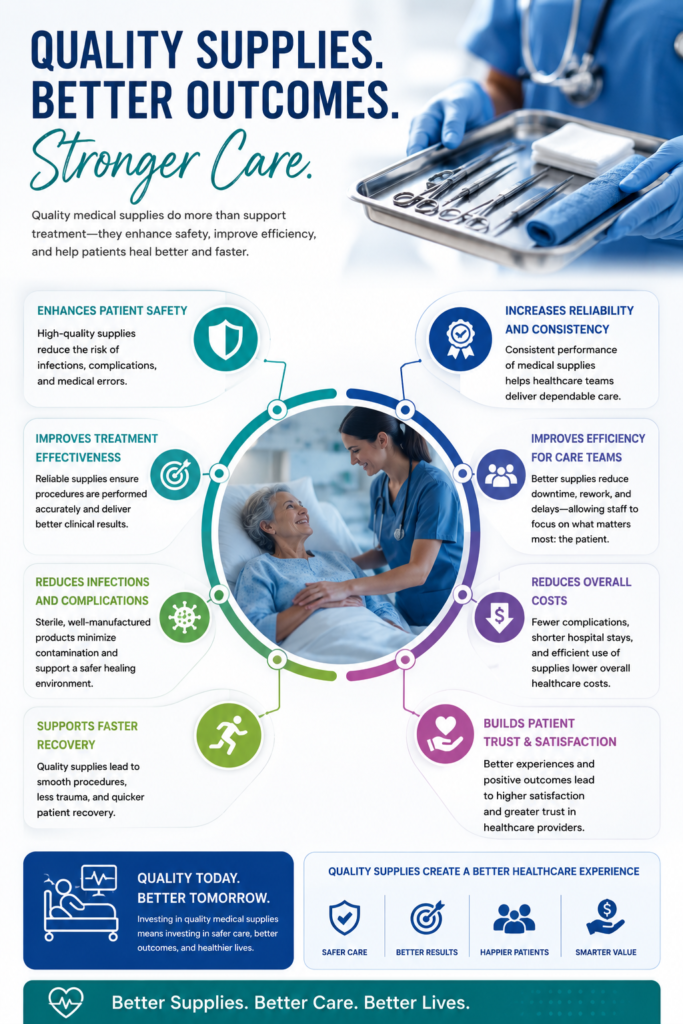
In today’s healthcare environment, patient outcomes are one of the most important measures of success. Hospitals, clinics, surgical centers, and healthcare professionals continuously strive to provide safe, effective, and efficient care. While the skills of healthcare providers and advancements in medical technology play a crucial role, the quality of medical supplies used during diagnosis, treatment, and recovery is equally important. High-quality medical supplies contribute significantly to patient safety, treatment effectiveness, clinical efficiency, and overall healthcare experiences.
From surgical instruments and catheters to diagnostic equipment and wound care products, every medical supply used in patient care can directly influence treatment outcomes. Investing in reliable, high-quality medical products is not just a purchasing decision—it is a commitment to delivering better healthcare.
Understanding Quality Medical Supplies
Quality medical supplies are products manufactured according to strict healthcare standards and quality control processes. These supplies are designed to perform consistently, meet safety requirements, and support healthcare professionals in delivering accurate and effective care.
High-quality medical products typically feature durable materials, reliable performance, precise design, and compliance with recognized regulatory standards. Whether used in routine procedures or complex surgeries, dependable medical supplies help reduce risks and improve patient care at every stage of treatment.
Enhancing Patient Safety
Patient safety is the foundation of quality healthcare. Medical supplies that perform reliably help prevent complications, reduce treatment errors, and support safe clinical practices.
For example, sterile surgical instruments minimize the risk of infection during procedures, while high-quality catheters reduce the likelihood of device-related complications. When healthcare providers use products that meet strict safety standards, patients benefit from greater protection and improved treatment experiences.
Reliable medical supplies also help healthcare teams perform procedures with confidence, reducing the chances of unexpected equipment failures that could impact patient care.
Reducing the Risk of Infections
Healthcare-associated infections remain a significant concern in medical facilities worldwide. Poor-quality or improperly manufactured medical products can increase the risk of contamination and infection.
High-quality sterile supplies play a critical role in infection prevention. Products such as surgical instruments, gloves, catheters, wound dressings, and infusion devices are designed to maintain hygiene standards and support infection-control protocols.
Reducing infection risks not only protects patients but also shortens recovery times and decreases the need for additional treatments. This leads to better outcomes and lower healthcare costs.
Supporting Accurate Diagnosis
Accurate diagnosis is essential for effective treatment planning. Diagnostic supplies and devices must provide reliable results so healthcare providers can make informed clinical decisions.
Products such as ECG electrodes, diagnostic catheters, specimen collection systems, and monitoring devices must perform consistently to ensure accurate data collection. High-quality diagnostic supplies help reduce errors and support timely identification of medical conditions.
When healthcare professionals receive accurate information from diagnostic tools, they can develop more effective treatment strategies and improve patient outcomes.
Improving Surgical Success Rates
Surgical procedures require precision, reliability, and consistency. The quality of surgical instruments and related supplies directly affects procedural success and patient recovery.
Well-manufactured surgical instruments provide superior handling, durability, and precision. Surgeons can perform procedures more efficiently when they have access to dependable equipment that functions as intended.
High-quality surgical supplies also contribute to shorter procedure times, reduced tissue trauma, and fewer complications. These benefits support faster recovery and improved patient satisfaction.
Enhancing Treatment Effectiveness
Medical supplies are often integral to treatment delivery. Whether administering medications, managing cardiovascular conditions, or supporting urinary care, the effectiveness of treatment depends on the reliability of the products being used.
For example, cardiology devices such as angiographic catheters and pressure monitoring systems help physicians perform life-saving interventions. Similarly, urology products such as ureteral stents and Foley catheters support effective management of urinary conditions.
When medical supplies function properly, treatments can be delivered more accurately and efficiently, leading to better patient outcomes.
Promoting Faster Recovery
Recovery is an important phase of the patient care journey. High-quality medical supplies contribute to faster healing and reduced complications during recovery periods.
Advanced wound care products help protect injuries and surgical sites while promoting optimal healing conditions. Reliable monitoring equipment allows healthcare providers to track patient progress and respond quickly to potential concerns.
Patients who experience fewer complications and receive effective postoperative care often recover more quickly and return to normal activities sooner.
Increasing Healthcare Efficiency
Quality medical supplies benefit not only patients but also healthcare providers and institutions. Reliable products improve workflow efficiency by reducing equipment failures, minimizing delays, and supporting smoother clinical operations.
Healthcare professionals can focus more on patient care when they are confident in the performance of the supplies they use. Reduced interruptions and improved procedural efficiency contribute to better treatment experiences and stronger clinical outcomes.
Efficient healthcare delivery also helps hospitals manage resources more effectively while maintaining high standards of care.
Building Trust Between Patients and Healthcare Providers
Trust is a critical component of healthcare. Patients expect hospitals and clinics to use safe, effective, and reliable medical products during their treatment.
The consistent use of high-quality medical supplies demonstrates a healthcare facility’s commitment to excellence and patient well-being. When patients feel confident in the quality of care they receive, they are more likely to trust healthcare providers and follow recommended treatment plans.
Strong patient trust often leads to improved satisfaction, better communication, and more positive healthcare experiences.
Supporting Long-Term Healthcare Success
Healthcare organizations that prioritize quality medical supplies often experience long-term benefits. Reliable products help reduce complications, improve patient satisfaction, and support positive clinical outcomes.
These advantages contribute to stronger institutional reputations, improved operational performance, and enhanced healthcare delivery. Investing in quality supplies can also reduce replacement costs and minimize expenses associated with equipment failures or treatment complications.
As healthcare continues to evolve, the demand for dependable medical products will remain a key factor in achieving sustainable success.
The Importance of Choosing Trusted Suppliers
Selecting the right medical supplies begins with choosing reputable manufacturers and suppliers. Healthcare facilities should partner with organizations that prioritize quality assurance, regulatory compliance, and product innovation.
Reliable suppliers provide products that meet industry standards and undergo rigorous testing before reaching healthcare providers. This commitment to quality helps ensure consistent performance and patient safety across a wide range of medical applications.
Healthcare decision-makers should evaluate factors such as product certifications, manufacturing processes, customer support, and industry reputation when selecting suppliers.
Conclusion
Quality medical supplies play a vital role in improving patient outcomes across every area of healthcare. From preventing infections and supporting accurate diagnosis to enhancing surgical success and promoting faster recovery, reliable medical products contribute directly to safer and more effective patient care. Healthcare providers depend on these supplies to deliver high-quality treatment while maintaining clinical efficiency and patient trust. By investing in premium medical products and partnering with trusted suppliers, hospitals and healthcare facilities can create better healthcare experiences and achieve superior outcomes for the patients they serve. In modern medicine, quality medical supplies are not simply tools—they are essential components of exceptional patient care.