
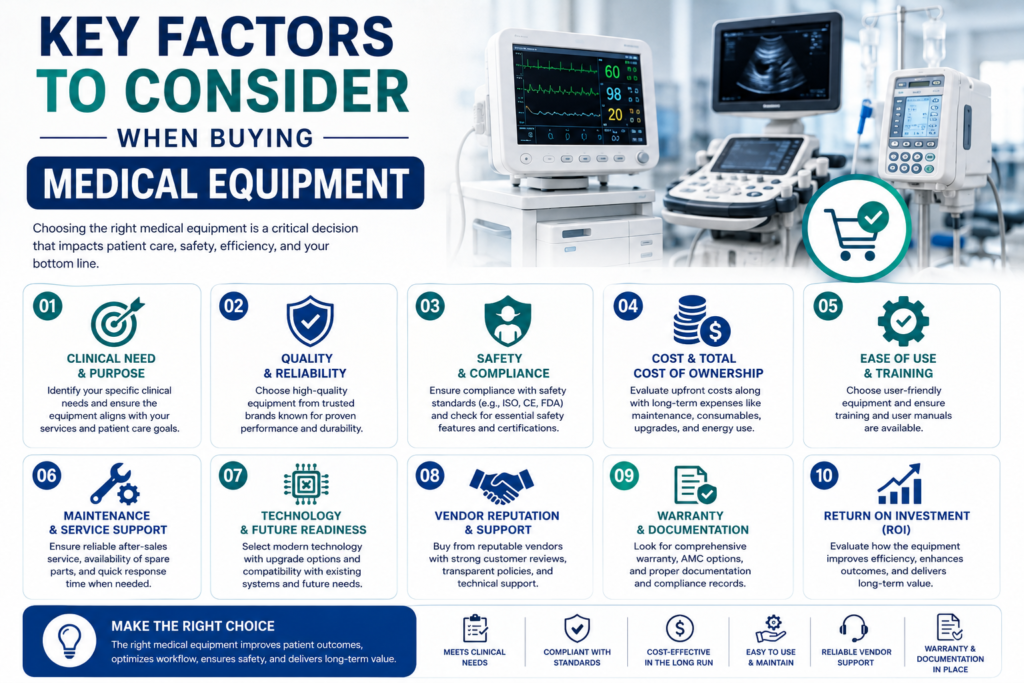
Purchasing medical equipment is one of the most important investments for hospitals, clinics, diagnostic centers, and healthcare facilities. The quality, reliability, and performance of medical equipment directly influence patient care, operational efficiency, and long-term healthcare outcomes. Whether a facility is purchasing surgical instruments, diagnostic devices, patient monitoring systems, or specialized medical equipment, making the right decision requires careful evaluation of several critical factors.
With rapid advancements in healthcare technology and a growing variety of products available in the market, selecting the most suitable equipment can be challenging. Healthcare providers must look beyond price alone and consider factors that contribute to safety, performance, durability, and value. A well-informed purchasing decision can help healthcare organizations improve patient outcomes while maximizing their investment.
Understanding Clinical Requirements
The first step in purchasing medical equipment is identifying the specific clinical needs of the healthcare facility. Different departments have different requirements depending on the services they provide.
For example, a cardiology department may require angiographic catheters, monitoring systems, and diagnostic equipment, while a gynecology unit may need speculums, curettes, and surgical instruments. Understanding the intended application helps ensure that the selected equipment supports clinical objectives and patient care goals.
Before making a purchase, healthcare providers should assess patient volume, procedure types, and future service expansion plans to determine the most appropriate equipment.
Prioritizing Patient Safety
Patient safety should always be the primary consideration when evaluating medical equipment. Devices used in healthcare settings must perform reliably and consistently to minimize risks during diagnosis, treatment, and monitoring.
Healthcare facilities should choose products that comply with recognized safety standards and regulatory requirements. Equipment with proven safety records helps reduce complications, prevent treatment errors, and improve overall patient outcomes.
Investing in safe and reliable equipment reflects a commitment to delivering high-quality healthcare services.
Evaluating Product Quality
The quality of medical equipment directly affects performance, durability, and clinical effectiveness. High-quality products are manufactured using premium materials and undergo strict quality-control processes before reaching healthcare providers.
Well-designed equipment typically offers better precision, reliability, and longevity compared to lower-quality alternatives. Choosing durable products helps reduce maintenance issues, replacement costs, and operational disruptions.
Healthcare organizations should carefully review product specifications, manufacturing standards, and quality certifications before making purchasing decisions.
Regulatory Compliance and Certifications
Medical equipment must meet applicable healthcare regulations and industry standards. Compliance demonstrates that the product has undergone testing and evaluation to ensure safety and effectiveness.
When purchasing equipment, healthcare facilities should verify relevant certifications and regulatory approvals. Compliance with recognized standards provides confidence that the equipment is suitable for clinical use and supports patient safety requirements.
Working with manufacturers that maintain strict quality and regulatory practices helps reduce procurement risks.
Reliability and Performance
Reliable equipment is essential for maintaining efficient healthcare operations. Equipment failures can lead to treatment delays, workflow disruptions, and potential risks to patient care.
Healthcare providers should evaluate performance records, product testing results, and user feedback when assessing equipment reliability. Devices that consistently perform as intended contribute to smoother clinical workflows and improved patient experiences.
Dependable equipment also reduces downtime and supports better resource management within healthcare facilities.
Ease of Use
Medical equipment should be user-friendly and intuitive for healthcare professionals. Complex devices that are difficult to operate can increase training requirements and the likelihood of user errors.
Equipment designed with simplicity and efficiency in mind helps healthcare providers perform procedures more effectively. Features such as clear interfaces, ergonomic controls, and straightforward operation contribute to improved productivity and patient care.
Ease of use becomes particularly important in high-pressure environments such as emergency departments and operating rooms.
Maintenance and Service Requirements
Every medical device requires some level of maintenance to ensure continued performance and safety. Before purchasing equipment, healthcare facilities should evaluate maintenance needs, service availability, and long-term support options.
Manufacturers that provide comprehensive service programs, technical assistance, and readily available replacement parts can significantly reduce operational challenges. Understanding maintenance requirements helps organizations plan for ongoing equipment management and budgeting.
Reliable service support ensures that equipment remains functional and available when needed.
Technology and Innovation
Healthcare technology continues to evolve rapidly, creating opportunities for improved patient care and operational efficiency. Modern medical equipment often incorporates advanced features such as digital connectivity, data integration, automated monitoring, and enhanced diagnostic capabilities.
When evaluating products, healthcare providers should consider whether the equipment can support future technological advancements and changing clinical needs. Investing in innovative solutions can improve productivity and help facilities remain competitive in an evolving healthcare environment.
However, advanced technology should always be balanced with practical usability and clinical relevance.
Cost and Long-Term Value
While budget considerations are important, focusing solely on the lowest purchase price can lead to costly mistakes. Medical equipment should be evaluated based on its total value over its lifespan.
Factors such as durability, maintenance costs, operating expenses, and expected service life all contribute to overall value. High-quality equipment may require a larger initial investment but often provides better long-term returns through improved reliability and reduced replacement needs.
Healthcare organizations should assess both short-term and long-term financial implications when making purchasing decisions.
Compatibility with Existing Systems
New equipment should integrate smoothly with existing healthcare infrastructure. Compatibility issues can create workflow challenges, increase training requirements, and reduce operational efficiency.
Healthcare providers should verify that new devices can work effectively with current equipment, software systems, and clinical processes. Seamless integration supports better communication, improved data management, and enhanced patient care.
Compatibility considerations are particularly important as healthcare facilities increasingly adopt digital technologies and interconnected systems.
Training and Staff Support
Even the most advanced medical equipment cannot deliver its full benefits without proper user training. Healthcare organizations should consider the availability of training programs and educational resources when selecting equipment.
Manufacturers that provide comprehensive training support help ensure that healthcare professionals can use equipment safely and effectively. Well-trained staff are more confident in operating medical devices, leading to improved performance and reduced operational risks.
Ongoing education and technical support contribute to long-term success and equipment utilization.
Manufacturer Reputation
The reputation of a manufacturer is often a strong indicator of product quality and customer support. Established companies with proven industry experience are more likely to deliver reliable equipment and dependable service.
Healthcare providers should research manufacturer history, product portfolios, customer reviews, and industry recognition before making purchasing decisions. Choosing a trusted supplier can provide greater confidence in product performance and long-term support.
Strong partnerships with reputable manufacturers often contribute to more successful procurement outcomes.
Future Scalability
Healthcare organizations must consider future growth and changing patient needs when purchasing equipment. Products that can adapt to increased demand or support additional functionality may offer greater long-term value.
Scalable solutions help facilities avoid frequent equipment replacements and support evolving clinical requirements. Planning for future needs allows healthcare providers to make more strategic investment decisions.
Conclusion
Buying medical equipment is a significant decision that affects patient care, operational efficiency, and organizational success. Factors such as clinical requirements, patient safety, product quality, regulatory compliance, reliability, ease of use, maintenance support, technological innovation, and long-term value should all be carefully evaluated before making a purchase. By taking a comprehensive approach to equipment selection, healthcare facilities can invest in solutions that improve clinical outcomes, enhance productivity, and support sustainable growth. In a rapidly changing healthcare landscape, choosing the right medical equipment is not simply a procurement task—it is a critical investment in the future of quality patient care.